Business Waste Removal in Wandsworth

Business waste removal in Wandsworth should be straightforward, orderly and suited to the way your premises operate. We provide collections for day-to-day commercial waste streams, from mixed office rubbish and packaging to bulky items that need careful handling. The service is designed to keep premises clear without turning disposal into a disruption, whether you manage a small workplace, a shared building or a larger trading site with recurring waste.
Our approach is practical: we look at the type of waste, access, volume and timing, then arrange removal that fits the site as closely as possible. That can include one-off clearances after an office refit or recurring removal for regular business output. If you are comparing options, clarity about the material and the collection point helps us match the work to the right method. You can also review our pricing and quotes information before making an enquiry.
For businesses that need a simple route to disposal, the aim is to handle the load properly, keep items moving through the process efficiently and leave your working area ready for use again. If you need to discuss a collection, tell us what needs removing and when it is best to attend. A short description is often enough to begin planning, and we can then advise on the most suitable service path.
Commercial waste collections for everyday premises
Day-to-day business waste can build up in many forms: cardboard, office paper, packaging, old display materials, broken fixtures and mixed general rubbish from routine operations. A planned collection helps keep these items from occupying storage space or creating awkward piles in back rooms, corridors or loading areas. We can deal with common non-hazardous commercial rubbish as part of a wider removal service, helping you keep the site tidy without arranging several separate clearances.
Where the waste is primarily office-based, the process often centres on paper-heavy material, obsolete equipment housings, shelving, partitions and other items that have reached the end of their useful life. For businesses that are changing layout or vacating a site, a clearance can also include the removal of loose furniture and mixed contents from work areas. For more detail on one common type of job, see our office clearance service.
Bulky items, furniture and specialist disposal
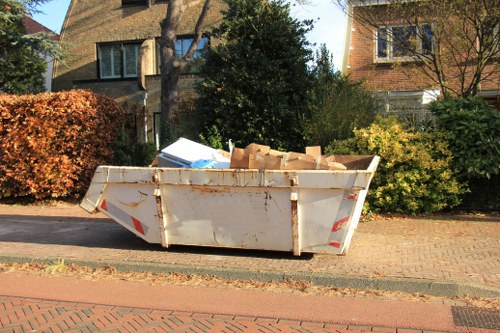
Many business collections include larger items that do not fit into standard waste bins. Desks, chairs, cabinets, shelving, meeting tables and reception furniture often need to be taken apart or moved in a particular sequence so the area remains safe and manageable. We handle this as part of a commercial clearance, taking care not to treat bulky waste as though it were ordinary bagged rubbish. That keeps the removal process more controlled and helps avoid damage inside the property.
Some items need a more specific route because of what they contain or how they are built. Where it is appropriate, a business may choose targeted disposal for appliances or specialist furniture instead of placing those items in a mixed load. To see one such option, visit our fridge and appliance removal page. This can be useful when a workplace, kitchenette or hospitality back area has a small number of heavy units that require separate handling.
Not every load is the same, and the most useful plan is usually the one that keeps sorting simple while still sending each item to the right route. If you are unsure how to group your waste, a brief description of the contents is enough to start. We can then explain whether the job is best treated as a general business waste collection or a more specific disposal task.
Clearance work for offices, shops and trade premises
Commercial premises often need different forms of clearance depending on how they are used. An office may need desks, chairs and filing materials removed; a shop may need old display units, packaging and stockroom waste dealt with; a trade space may need mixed rubbish and redundant fittings cleared after a change in use. The removal method should follow the layout and contents rather than forcing every job into the same pattern.
We also provide a route for larger clearances where the working space contains a mix of items rather than one isolated category. If you are emptying a whole floor, a back office or an operational room, a broader property clearance can be more efficient than tackling each item separately. Our business waste removal service is built around that kind of mixed commercial need, where the purpose is to clear usable space and dispose of the contents properly.
Choosing the right clearance for the job

For some customers the important decision is not simply removal, but which type of clearance best fits the material. A general waste collection suits mixed commercial rubbish. Furniture disposal suits a few large items. A room clearance suits a fuller space where more than one category is involved. Choosing carefully avoids unnecessary handling and helps keep the work more efficient from the outset. If you know the main item type, that usually points towards the right page and the right process.
There are also practical differences in how items are prepared. Some businesses leave material gathered in one room, while others need waste taken from several points across the building. Access, lift use, stairs and loading arrangements can affect how the removal is carried out, so it is worth noting these details before the collection date. For a broader overview of what we remove, our waste removal page gives a useful starting point.
In simple terms, the better the match between the waste and the service, the smoother the clearance tends to be. That does not mean every load needs a specialist solution, only that the contents should be described honestly so the collection can be planned sensibly. A short list of what is included is often enough, especially if there are any large, awkward or fragile pieces among the waste.
About Wandsworth
Wandsworth sits on the south bank of the River Thames in south-west London and has long been shaped by its riverside position, transport links and changing patterns of settlement. The area includes busy commercial streets, residential neighbourhoods and open riverside stretches, with the river forming a major geographical reference point. Wandsworth Common provides a large expanse of open green space, while the Thames Path offers a continuous walking route along the water. The locality is also closely associated with the wider borough of the same name, though the name often refers more specifically to the historic centre around the river crossing and town centre. Its development has been influenced by industry, movement and redevelopment over time, with older surviving structures sitting alongside newer buildings. Clapham Junction lies nearby and has helped make the district a well-connected part of London for many years. The area also includes a range of public spaces, local shops and civic buildings that reflect its blend of historic and modern character. Along the riverside, views, bridges and mixed-use development contribute to a setting that feels both urban and layered in history. In everyday life, Wandsworth is known for combining busy transport corridors with calmer green spaces, creating a varied urban landscape rather than a single uniform district.
Household-style clearances for mixed contents
Although the main focus here is business work, some commercial premises also contain household-style items that need careful sorting. That can happen in converted offices, small workspaces, caretaker areas or premises with staff rooms and storage cupboards. In those cases, the removal plan may include furniture, loose contents and general rubbish together, provided the material is suitable for the chosen route. Keeping the categories clear at the start helps avoid unnecessary delays once the team arrives.
Where a room contains a wide mix of contents, it can be more practical to use a broader clearance service rather than separate smaller visits. Our home clearance page covers the kind of mixed-item work that can also be relevant where business premises contain domestic-style furniture or assorted contents. This is especially useful when the job is less about one single object and more about clearing a defined space responsibly.
The key point is that the contents should be described by what they are, not by how quickly they need to disappear. That allows the right service to be matched to the job and helps keep the collection orderly from the outset. A sensible plan usually starts with the main item groups, then moves on to the access details and any constraints that might affect removal.
What to tell us when requesting a quotation

To request a quotation, it helps to give a concise description of the waste, the premises type and the access available on site. If the collection involves stairs, shared entrances, narrow passages or loading restrictions, mention them early so the removal can be planned around the building. A clear outline of what is staying and what is going can also make the process easier, especially when the space contains a mix of furniture, bagged waste and loose items.
For many jobs, two practical details are enough to begin: the approximate volume and the general item type. If you have photos or a short inventory, those can help confirm whether the waste is best grouped as business rubbish, furniture, appliance disposal or a broader clearance. You can also use our book online page if you prefer to start the process digitally rather than by making a general enquiry first.
Use these points as a simple guide: what needs removing, where it is located, and when access is available. That information keeps the quotation process focused and avoids unnecessary back-and-forth. Once the main details are clear, arranging the collection usually becomes much easier, and we can advise on the most suitable next step for the job.
Items that need extra care
Some commercial waste streams require more care than ordinary mixed rubbish. This can include items that may be awkward to move, potentially brittle, or subject to specific disposal rules. Where the load contains anything unusual, it is better to identify it before the collection rather than leave it to be discovered on site. That way the removal can be organised with a clearer understanding of how the items should be handled and separated.
Where relevant, specialist disposal routes may be better than general clearance. Our hazardous waste disposal page is there for items that require particular attention and should not be treated as routine refuse. Businesses should not mix those materials into ordinary loads unless the service has been selected for that purpose, because correct handling depends on the nature of the waste itself.
If a job includes both ordinary and more sensitive items, the safest approach is usually to identify each type clearly at the outset. That allows the collection to be arranged in a way that respects the different handling requirements rather than assuming all waste can follow the same path. A precise description is more helpful than a broad label when there is any uncertainty.
Pricing factors and collection planning
The cost of a business waste removal job usually depends on the amount of waste, the sort of items included, the access available and whether the work is a one-off clearance or a more involved collection. Mixed loads that contain bulky pieces can take more sorting and loading than bagged waste alone. Equally, a site with easy access may be simpler to clear than one with stairs, limited parking or a shared entrance. Those practical factors help shape the quotation.
It is also worth noting whether the collection needs to happen at a particular time of day, especially if your premises operate around customers, deliveries or staff movement. Scheduling can affect the way the work is carried out, so giving a realistic time window is often more useful than trying to fit the job into a vague slot. If sustainability matters to your organisation, our recycling and sustainability page explains the wider approach behind responsible disposal and reuse where possible.
For a smooth enquiry, keep the description simple and factual. Mention the main items, the floor or room they are on, and whether anything is especially heavy or awkward. That is usually enough to create a sensible quotation and avoid unnecessary assumptions. If the job changes, update the details rather than leaving us to work from outdated information.
About the wider service process
When a business asks for waste removal, the service normally works best as a sequence: identify the contents, confirm the access, agree the collection type and then arrange the clearance. That is true whether the job is for office rubbish, furniture or a fuller commercial emptying. Keeping those stages clear means the removal can be planned around the actual site conditions rather than an approximate idea of what is involved.
Where items are being cleared from multiple rooms, it can help to think in terms of priority areas. A reception, storage room or workplace floor may need to be handled in a different order depending on access and the layout of the building. If there is any uncertainty, describe the spaces involved and the type of waste in each one. That gives a more accurate basis for the collection and keeps the process straightforward.
If you are ready to discuss the job, start with the main item type and the volume involved. That simple step is often enough to move the enquiry forward. For a final check on the service path and quotation details, please use our contact us page when you are ready to arrange the next step.